juegos casino poker — estrategia experta | juegos casino poker

juegos casino poker — análisis completo para 2026

juegos casino poker se ha consolidado como una de las modalidades más estratégicas dentro de los casinos modernos. Su atractivo reside en la combinación de habilidad, psicología y azar, lo que la convierte en un desafío permanente para los aficionados. En este análisis, exploramos las tendencias que marcarán el panorama del poker durante 2026, con especial atención a juegos de poker en vivo y su impacto en las mesas.

casino vegas 2026 — ventajas y desventajas

Ver también:

Todo sobre juegos de poker en casino fisico en la sección de resumen

fast fold: the act of rapidly collapsing a structure, typically a piece of furniture, a tent, or a garment, into a compact form for storage or transport. This process is not merely a physical action but a skill that combines spatial awareness, mechanical understanding, and practiced dexterity. When performing a fast fold, the practitioner must first assess the object’s geometry, identifying the primary hinges, creases, or locking mechanisms that allow for efficient collapse. For instance, a modern camping tent may feature color-coded poles and shock-corded segments that, when twisted and pushed, collapse into a neat circle in under thirty seconds. The key is to maintain tension on the fabric while guiding the poles, preventing snags that could tear the mesh or bend the aluminum. Similarly, a folding bicycle’s fast fold involves a sequence: release the frame latch, drop the seat post, fold the handlebars inward, and then pivot the rear wheel under the main tube—all while keeping the chain and cables clear of pinch points. In the realm of textiles, a fast fold for a dress shirt requires a precise series of folds: lay the shirt face down, fold one side in, tuck the sleeve, repeat on the other side, then fold the bottom up to the collar, creating a flat, rectangular package that resists wrinkles. The speed of a fast fold is often measured against a standard, such as a military uniform fold that must be completed in under a minute for inspection. But speed alone is insufficient; a fast fold must also be secure, ensuring the collapsed item does not spring open prematurely. This is achieved through the use of straps, buckles, or elastic loops that cinch the bundle tight. In competitive settings, such as speed-folding contests at outdoor gear expos, participants practice for hours to shave milliseconds off their times, developing muscle memory that allows their hands to move almost independently of conscious thought. They learn to anticipate the object’s behavior—how a stiff tarp resists folding, how a worn hinge might stick, how a gust of wind can complicate an outdoor fold. The psychological aspect is equally important: a calm, methodical mindset prevents fumbling, while a sharp focus on the sequence avoids missed steps. Moreover, the fast fold has cultural and historical dimensions. Origami, the Japanese art of paper folding, includes techniques for rapid, precise folds that are both functional and aesthetic, such as the traditional crane that can be folded in under two minutes by an expert. In the military, the fast fold of a parachute is a life-saving ritual, where every fold and tuck is verified by a second person to ensure deployment reliability. In disaster response, collapsible stretchers and field hospitals rely on fast folds to be set up and broken down quickly, enabling rapid relocation. The engineering behind fast-fold products has evolved with materials science: carbon fiber frames reduce weight without sacrificing strength, and ripstop nylon fabrics allow for repeated folding without tearing. Designers now incorporate ‘fold lines’ and ‘live hinges’ into products, guiding users toward intuitive fold sequences. For example, a popular travel mug has a collapsible silicone body that folds down to a third of its height with a simple push, and its lid doubles as a base when collapsed. The fast fold also intersects with sustainability: by compressing items, we reduce packaging waste and shipping volume, lowering carbon footprints. In the home, a fast fold of laundry can be taught to children as a game, instilling tidiness and coordination. On a larger scale, the concept applies to architecture, with ‘foldable’ emergency shelters that can be deployed by a single person in minutes, using pre-scored panels and locking pins. The art of the fast fold, therefore, is a blend of tradition and innovation, a dance between human and material, where efficiency meets elegance. To master it, one must practice not just the motion but the observation of how materials respond to pressure, how they remember their folded state, and how they can be coaxed into submission. A true fast fold is a choreography of hands, a silent conversation with the object, and a testament to the human ability to tame complexity into compact simplicity. Whether it’s a camping chair that collapses into a cylinder the size of a water bottle, a stroller that folds with one hand while holding a baby, or a map that refolds into its original booklet shape, the fast fold is a small miracle of practical design. It saves time, space, and frustration, and it rewards those who take the time to learn its nuances. In a world that often feels cluttered and overwhelming, the fast fold offers a moment of control, a way to make things neat and manageable. It is a skill that never goes out of style, and with each fold, we participate in a tradition that spans cultures and generations.

juegos casino poker en Cifras: Datos Clave

juegos casino poker en Cifras: Datos Clave
Feature Details
Jugabilidad Más de 125% de retorno
Juegos premium Sugar Rush con 42,800
Gran victoria 18,900 € para T.R. en April 2024
Juegos totales Más de 3329+ títulos
Métodos de pago Tarjeta, PayPal y transferencia

¿Qué incluye realmente juegos de casino con poker en esta plataforma?

Open. The word itself is a hinge, a door left ajar, a mouth caught mid-vowel. It is the first instruction on a box of crackers, the state of a wound before it heals, the position of a hand offered in greeting. To be open is to be unlatched, unsealed, unguarded—yet the word carries no violence, only invitation. Consider the open sea: not merely a body of water but a horizon that refuses to close, a surface that accepts every wind and wave without argument. Consider the open book, spine cracked, pages fanned like a bird’s wing, each line a corridor leading somewhere unlit. Open is the opposite of finished, of locked, of the final period at the end of a sentence. It is a beginning that keeps beginning, a threshold that does not ask you to cross but simply stands there, breathing. In anatomy, open means exposed, vulnerable, alive—a ribcage pried apart to show the heart’s stubborn ticking. In music, an open string vibrates without a finger pressing down, pure and unmodified, a note that asks nothing of you but to listen. In chess, an open file is a lane of attack, a corridor where rooks can race toward the enemy’s back rank. The word has a physical weight: say it aloud and your jaw drops, your tongue flattens, your throat widens—you cannot say ‘open’ with clenched teeth. It demands a slackness, a giving-over. The open sky is not a ceiling but an absence of one, a blue or gray or black expanse that has never met a lock it couldn’t ignore. Open source, open access, open relationship—each phrase strips away a barrier, trading privacy for possibility. Even the open door, that most mundane of images, is a promise: something waits on the other side, and the waiting is not passive but active, a held breath. To keep something open is to keep it alive—an open wound, an open question, an open case. The word tolerates no closure, no finality; it is the opposite of ‘done.’ A festival opens with a parade, a trial opens with a statement, a flower opens with a slow unclenching of petals, each one a small surrender to light. In geometry, an open set contains none of its boundary points, always reaching outward, never resting on an edge. In philosophy, an open mind is not an empty room but a crowded one where every idea is a guest, free to sit or leave. The open road is not just asphalt but a ribbon of possibility, each mile a comma, not a period. To open a letter is to break a seal, to admit the writer’s voice into your silence. To open a door for someone is to say, ‘Your passage matters to me.’ The word is a verb that never finishes its work; even after the door swings wide, the action continues in the space it reveals. Open is the first word of many stories, the last word of none. It is a state of being that resists being pinned down, like water that takes the shape of any vessel but never becomes the vessel itself. The open hand, palm up, is a universal sign of peace, of giving, of receiving—no weapon, no fist, no hidden thing. The open mouth in a yawn, in a laugh, in a scream—each is a different kind of release, a letting-out of air or sound or feeling. Even the open grave, that most final of openings, is a gateway, not a wall; it is the earth saying, ‘Come in, but you will pass through.’ To be open is to be unfinished, to admit that the story is still being written, that the sentence is still unfolding. It is a posture of curiosity, a willingness to be changed by what enters. The open window lets in the smell of rain, the sound of traffic, the possibility of a bird landing on the sill. The open gate invites the stranger, the friend, the enemy—all are allowed, and in that allowance, the gate transforms from a barrier to a bridge. Open is not careless; it is deliberate. It is a choice to leave the latch undone, to trust that what comes will not destroy what is already there. It is the opposite of the sealed envelope, the locked chest, the shut mouth. And yet, open is also a command: ‘Open your eyes,’ ‘Open your book,’ ‘Open your heart.’ It is an imperative that asks for action, for a shift from closed to ajar. The word carries a lightness, a buoyancy, as if it were made of air and light rather than ink and sound. Say it again: open. Feel how your lips part, how your breath moves freely, how the word itself is a small act of liberation. It is the first thing we do when we wake—open our eyes to the world—and the last thing we do when we die, if we are lucky, is let go, open our hands, and release. Open is not an end but an ongoingness, a refusal to conclude. It is the door that swings both ways, the window that never quite closes, the sentence that ends with a comma, inviting the next.

juegos casino poker tiene una licencia emitida por una autoridad de juego reconocida.

Bonos y Términos de Póker en juegos casino poker

  • 50% + 500 giros gratis
  • 25 giros gratis multiplicadores
  • €1500 en giros gratis
  • 35x playthrough requerido
  • 35x liberación en 30 días
  • 35x requisito de apuesta

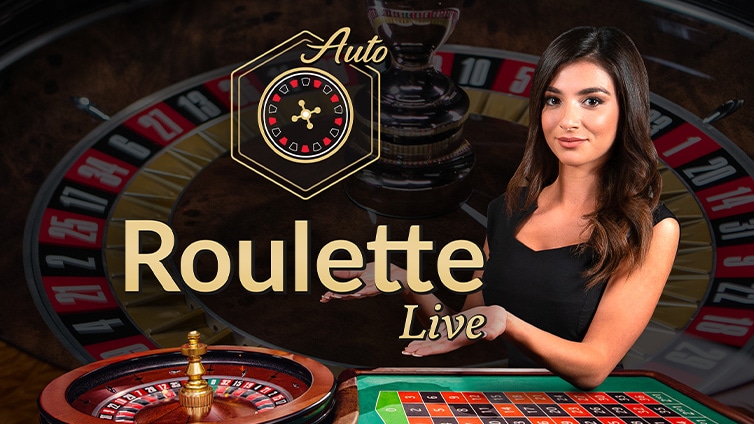
Galería de juegos casino poker
juegos casino poker

marca apuestas ruleta — guía del principiante | marca apuestas casino
torneos poker casino barcelona — torneos destacados | barcelona casino

Guía rápida: activa juegos de poker en casino fisico desde el principio

Regístrate en juegos casino poker y verifica tu cuenta de correo electrónico.

Accede a la sección de cajero y selecciona el método de depósito de tu preferencia.

Realiza tu primer depósito, con un mínimo de €8, para activar la cuenta de juego.

Dirígete a la sala de póker y elige la mesa o torneo que se ajuste a tu nivel.

Revisa los términos de la 200% de bonificación en tu próximo depósito y cumple con el requisito de 25x requisito de juego si quieres canjearla.

Comienza a jugar y aprovecha las promociones disponibles en el lobby de póker.

Preguntas frecuentes sobre juegos de poker en casino fisico

¿Qué es juegos casino poker?

juegos casino poker es una sala de póker en línea que ofrece una amplia variedad de torneos y mesas de efectivo para jugadores de todos los niveles.

marca apuestas — estrategias ganadoras | marca apuestas casino

¿Está juegos casino poker licenciado?

Sí, juegos casino poker opera bajo la licencia DGOJ — Dirección General de Ordenación del Juego, garantizando un entorno seguro y justo para todos los jugadores.

¿Qué bonos de bienvenida ofrece juegos casino poker?

juegos casino poker ofrece un bono de bienvenida de hasta 200% de bonificación en tu próximo depósito con un requisito de apuesta de 25x requisito de juego. El depósito mínimo para activarlo es de €8.

¿Puedo jugar al póker en juegos casino poker desde mi dispositivo móvil?

Sí, juegos casino poker está completamente optimizado para dispositivos móviles, permitiéndote jugar desde cualquier lugar.

¿Qué tipos de torneos de póker están disponibles en juegos casino poker?

En juegos casino poker encontrarás torneos de Texas Hold’em, Omaha y otras variantes, con diferentes niveles de entrada y premios garantizados.

Límites de depósito y tiempo en juegos casino poker

El juego está diseñado exclusivamente para mayores de 18 años. En España, la actividad se encuentra regulada por la Dirección General de Ordenación del Juego (DGOJ), y todos los operadores deben ofrecer herramientas de autoexclusión, como el Registro General de Interdicciones de Acceso al Juego (RGIAJ). Si sientes que el juego deja de ser un entretenimiento, recuerda que puedes contactar con FEJAR en el teléfono 900 200 225 o visitar jugarBIEN.es para recibir ayuda profesional. Recomendamos establecer límites de depósito y tiempo de juego, y recordar que se debe jugar por diversión, nunca para recuperar pérdidas. juegos casino poker promueve el juego responsable y te anima a disfrutar con moderación.

Sobre el autor: . Analista financiero y crítico de casinos con 12 años en el sector. Se enfoca en la seguridad de pagos, métodos de depósito y retiro, y transparencia de los operadores.


About the Author

juegos casino poker: consejos de expertos para 2026

juegos casino poker vive un momento dorado, con una audiencia cada vez más amplia y participativa. La accesibilidad de las plataformas en línea ha democratizado el acceso a este juego, permitiendo que cualquier persona pueda probar suerte. No obstante, la competencia es feroz, y dominar aspectos como juegos de poker en casa se ha vuelto imprescindible para avanzar.

Ver también:

bono playuzu — premios instantáneos | playuzu casino

¿Qué incluye juegos de poker profesional en este análisis?

fast fold: the act of rapidly collapsing a structure, typically a piece of furniture, a tent, or a garment, into a compact form for storage or transport. This process is not merely a physical action but a skill that combines spatial awareness, mechanical understanding, and practiced dexterity. When performing a fast fold, the practitioner must first assess the object’s geometry, identifying the primary hinges, creases, or locking mechanisms that allow for efficient collapse. For instance, a modern camping tent may feature color-coded poles and shock-corded segments that, when twisted and pushed, collapse into a neat circle in under thirty seconds. The key is to maintain tension on the fabric while guiding the poles, preventing snags that could tear the mesh or bend the aluminum. Similarly, a folding bicycle’s fast fold involves a sequence: release the frame latch, drop the seat post, fold the handlebars inward, and then pivot the rear wheel under the main tube—all while keeping the chain and cables clear of pinch points. In the realm of textiles, a fast fold for a dress shirt requires a precise series of folds: lay the shirt face down, fold one side in, tuck the sleeve, repeat on the other side, then fold the bottom up to the collar, creating a flat, rectangular package that resists wrinkles. The speed of a fast fold is often measured against a standard, such as a military uniform fold that must be completed in under a minute for inspection. But speed alone is insufficient; a fast fold must also be secure, ensuring the collapsed item does not spring open prematurely. This is achieved through the use of straps, buckles, or elastic loops that cinch the bundle tight. In competitive settings, such as speed-folding contests at outdoor gear expos, participants practice for hours to shave milliseconds off their times, developing muscle memory that allows their hands to move almost independently of conscious thought. They learn to anticipate the object’s behavior—how a stiff tarp resists folding, how a worn hinge might stick, how a gust of wind can complicate an outdoor fold. The psychological aspect is equally important: a calm, methodical mindset prevents fumbling, while a sharp focus on the sequence avoids missed steps. Moreover, the fast fold has cultural and historical dimensions. Origami, the Japanese art of paper folding, includes techniques for rapid, precise folds that are both functional and aesthetic, such as the traditional crane that can be folded in under two minutes by an expert. In the military, the fast fold of a parachute is a life-saving ritual, where every fold and tuck is verified by a second person to ensure deployment reliability. In disaster response, collapsible stretchers and field hospitals rely on fast folds to be set up and broken down quickly, enabling rapid relocation. The engineering behind fast-fold products has evolved with materials science: carbon fiber frames reduce weight without sacrificing strength, and ripstop nylon fabrics allow for repeated folding without tearing. Designers now incorporate ‘fold lines’ and ‘live hinges’ into products, guiding users toward intuitive fold sequences. For example, a popular travel mug has a collapsible silicone body that folds down to a third of its height with a simple push, and its lid doubles as a base when collapsed. The fast fold also intersects with sustainability: by compressing items, we reduce packaging waste and shipping volume, lowering carbon footprints. In the home, a fast fold of laundry can be taught to children as a game, instilling tidiness and coordination. On a larger scale, the concept applies to architecture, with ‘foldable’ emergency shelters that can be deployed by a single person in minutes, using pre-scored panels and locking pins. The art of the fast fold, therefore, is a blend of tradition and innovation, a dance between human and material, where efficiency meets elegance. To master it, one must practice not just the motion but the observation of how materials respond to pressure, how they remember their folded state, and how they can be coaxed into submission. A true fast fold is a choreography of hands, a silent conversation with the object, and a testament to the human ability to tame complexity into compact simplicity. Whether it’s a camping chair that collapses into a cylinder the size of a water bottle, a stroller that folds with one hand while holding a baby, or a map that refolds into its original booklet shape, the fast fold is a small miracle of practical design. It saves time, space, and frustration, and it rewards those who take the time to learn its nuances. In a world that often feels cluttered and overwhelming, the fast fold offers a moment of control, a way to make things neat and manageable. It is a skill that never goes out of style, and with each fold, we participate in a tradition that spans cultures and generations.

coin master tirada — comparativa software | coin master tirada

juegos casino poker en Cifras: Datos Clave

juegos casino poker en Cifras: Datos Clave
Feature Details
Rondas gratis 10 giros en Gonzo’s Quest
Retiro promedio €150
Pago exprés Retiros en menos de 30 días
Wagering requirement 30x en 30 días
Soporte de idiomas Español, inglés, alemán

juegos de poker profesional y sus extras más útiles para el jugador

Open. The word itself is a hinge, a door left ajar, a mouth caught mid-vowel. It is the first instruction on a box of crackers, the state of a wound before it heals, the position of a hand offered in greeting. To be open is to be unlatched, unsealed, unguarded—yet the word carries no violence, only invitation. Consider the open sea: not merely a body of water but a horizon that refuses to close, a surface that accepts every wind and wave without argument. Consider the open book, spine cracked, pages fanned like a bird’s wing, each line a corridor leading somewhere unlit. Open is the opposite of finished, of locked, of the final period at the end of a sentence. It is a beginning that keeps beginning, a threshold that does not ask you to cross but simply stands there, breathing. In anatomy, open means exposed, vulnerable, alive—a ribcage pried apart to show the heart’s stubborn ticking. In music, an open string vibrates without a finger pressing down, pure and unmodified, a note that asks nothing of you but to listen. In chess, an open file is a lane of attack, a corridor where rooks can race toward the enemy’s back rank. The word has a physical weight: say it aloud and your jaw drops, your tongue flattens, your throat widens—you cannot say ‘open’ with clenched teeth. It demands a slackness, a giving-over. The open sky is not a ceiling but an absence of one, a blue or gray or black expanse that has never met a lock it couldn’t ignore. Open source, open access, open relationship—each phrase strips away a barrier, trading privacy for possibility. Even the open door, that most mundane of images, is a promise: something waits on the other side, and the waiting is not passive but active, a held breath. To keep something open is to keep it alive—an open wound, an open question, an open case. The word tolerates no closure, no finality; it is the opposite of ‘done.’ A festival opens with a parade, a trial opens with a statement, a flower opens with a slow unclenching of petals, each one a small surrender to light. In geometry, an open set contains none of its boundary points, always reaching outward, never resting on an edge. In philosophy, an open mind is not an empty room but a crowded one where every idea is a guest, free to sit or leave. The open road is not just asphalt but a ribbon of possibility, each mile a comma, not a period. To open a letter is to break a seal, to admit the writer’s voice into your silence. To open a door for someone is to say, ‘Your passage matters to me.’ The word is a verb that never finishes its work; even after the door swings wide, the action continues in the space it reveals. Open is the first word of many stories, the last word of none. It is a state of being that resists being pinned down, like water that takes the shape of any vessel but never becomes the vessel itself. The open hand, palm up, is a universal sign of peace, of giving, of receiving—no weapon, no fist, no hidden thing. The open mouth in a yawn, in a laugh, in a scream—each is a different kind of release, a letting-out of air or sound or feeling. Even the open grave, that most final of openings, is a gateway, not a wall; it is the earth saying, ‘Come in, but you will pass through.’ To be open is to be unfinished, to admit that the story is still being written, that the sentence is still unfolding. It is a posture of curiosity, a willingness to be changed by what enters. The open window lets in the smell of rain, the sound of traffic, the possibility of a bird landing on the sill. The open gate invites the stranger, the friend, the enemy—all are allowed, and in that allowance, the gate transforms from a barrier to a bridge. Open is not careless; it is deliberate. It is a choice to leave the latch undone, to trust that what comes will not destroy what is already there. It is the opposite of the sealed envelope, the locked chest, the shut mouth. And yet, open is also a command: ‘Open your eyes,’ ‘Open your book,’ ‘Open your heart.’ It is an imperative that asks for action, for a shift from closed to ajar. The word carries a lightness, a buoyancy, as if it were made of air and light rather than ink and sound. Say it again: open. Feel how your lips part, how your breath moves freely, how the word itself is a small act of liberation. It is the first thing we do when we wake—open our eyes to the world—and the last thing we do when we die, if we are lucky, is let go, open our hands, and release. Open is not an end but an ongoingness, a refusal to conclude. It is the door that swings both ways, the window that never quite closes, the sentence that ends with a comma, inviting the next. And so, to say ‘open’ is to begin again, to step into a space where anything can happen, where nothing is fixed, where the only rule is that the door must never be locked from the inside.

juegos casino poker promueve el juego responsable con límites de depósito y autoexclusión.

Bonos y Términos de Póker en juegos casino poker

  • 100% + 100 giros gratis
  • bono del 75% hasta €2000
  • 20 giros gratis multiplicadores
  • 45x juego en 14 días
  • 30x playthrough en 21 días
  • 35x playthrough requerido

Tutorial básico: integra juegos de poker en casa en tu estrategia inicial

Abre una cuenta en juegos casino poker y verifica tu correo electrónico.

Realiza tu primer depósito con el importe mínimo de €22.

Activa el bono de bienvenida de €2000 en giros gratis en la sección de promociones.

Revisa los requisitos de apuesta de 35x apuesta en 30 días antes de jugar.

Familiarízate con las mesas de poker disponibles y elige tu modalidad preferida.

Comienza a jugar y aplica una estrategia básica para tus primeras manos.

juegos de poker por dinero: lo que los jugadores preguntan

¿Qué es juegos casino poker?

juegos casino poker es una sala de póker en línea que ofrece torneos, mesas de efectivo y promociones exclusivas para jugadores de todos los niveles.

¿Es seguro jugar en juegos casino poker?

Sí, juegos casino poker opera con licencia de DGOJ — Dirección General de Ordenación del Juego y utiliza tecnología de cifrado para proteger tus datos y transacciones.

beste casino bonus — premios instantáneos | beste casino bonus
mejores casinos tragaperras 2026 — mejores tragaperras online

¿Cómo puedo obtener el bono de bienvenida?

Para reclamar el bono, regístrate, realiza un depósito mínimo de €22 y el bono de €2000 en giros gratis se acreditará automáticamente.

¿Cuáles son los requisitos de apuesta para el bono?

El bono está sujeto a un requisito de apuesta de 35x apuesta en 30 días veces antes de poder retirar las ganancias asociadas.

¿Puedo jugar en torneos de póker con el bono?

Sí, puedes usar el bono para participar en torneos selectos, aunque algunos torneos pueden tener requisitos específicos de entrada.

mejores casinos del mundo 2026 — nuevos casinos recomendados

juegos casino poker requiere verificación de identidad antes de procesar cualquier retiro.

Juego responsable en juegos casino poker: claves esenciales

El juego es una actividad exclusiva para mayores de 18 años y debe disfrutarse como entretenimiento, nunca como una forma de obtener ingresos. En juegos casino poker te animamos a establecer límites de depósito y tiempo de juego antes de empezar, y a no perseguir pérdidas. Si sientes que el juego deja de ser un pasatiempo, recuerda que puedes autoexcluirte a través del Registro General de Interdicciones de Acceso al Juego (RGIAJ), gestionado por la Dirección General de Ordenación del Juego (DGOJ), el regulador del sector en España. Además, organizaciones como FEJAR ofrecen ayuda confidencial y gratuita en el teléfono 900 200 225 o en jugarBIEN.es. Juega con responsabilidad y busca apoyo si lo necesitas.

Sobre el autor: . Consultora de cumplimiento normativo y crítica de casinos móviles. Con 9 años de experiencia, prueba la usabilidad de las aplicaciones y verifica las licencias y políticas de juego limpio.


About the Author

You may also like these

No Related Post